
Written by the Akel Hair Clinic medical team in Tirana, led by Dr. Gönül Kiracı (20+ years of hair transplant experience).
Short answer: stem cell hair treatment is a regenerative therapy that uses cells or cell-rich tissue from your own body to try to wake up weak hair follicles and slow thinning. Early studies are promising, especially for thinning hair in the early stages, but it cannot regrow hair on areas that are already completely bald, and large long-term studies are still missing. For bald areas, a hair transplant remains the proven solution.
What is stem cell hair treatment?
Every hair follicle contains its own small population of stem cells. They are responsible for starting each new growth cycle. In androgenetic (pattern) hair loss, follicles gradually shrink and produce thinner, shorter hairs, but many of them are still alive for years. Stem cell hair treatments aim to support these weakened follicles with growth factors and signals from healthy cells.
The term “stem cell hair treatment” is used for several different procedures. It is worth knowing which one a clinic means:
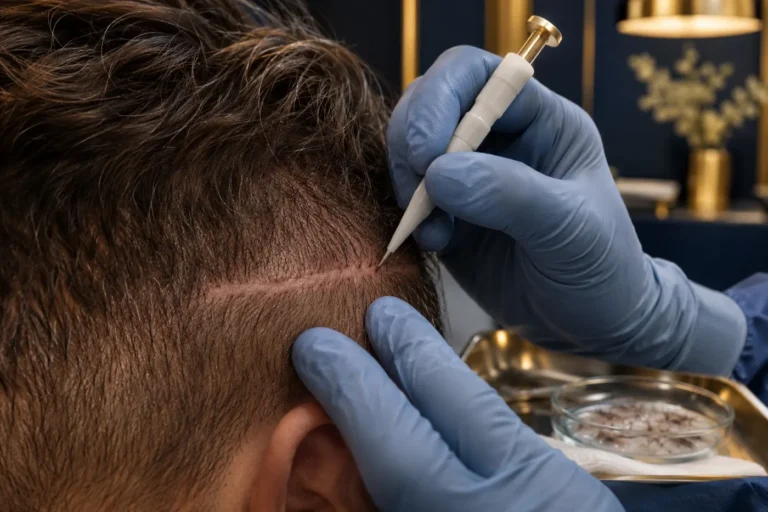
- Autologous micrografts: a few tiny skin samples are taken from the scalp or from behind the ear, mechanically processed into a suspension that contains follicle stem cells and growth factors, and injected into thinning areas in the same session. This is the method used at Akel Hair Clinic, with samples taken from behind the ear.
- Fat-derived cells (adipose-derived / SVF): a small amount of fat is taken from the abdomen or thighs with a mini liposuction, processed to concentrate the regenerative cell fraction and injected into the scalp. This method needs an extra procedure and is not used at Akel Hair Clinic.
- Stem cell–derived products: exosomes or “conditioned media” contain signalling molecules made by stem cells, but no living cells.
- “Stem cell hair transplant”: a normal FUE or DHI transplant combined with one of the treatments above. It is not a technique that grows new hair from a few cells. At Akel Hair Clinic, our Stem Cell Hair Transplant combines DHI or Sapphire FUE with micrografts from behind the ear.
How does it work?
The idea is simple: regenerative cells release growth factors that improve blood supply, reduce inflammation and push miniaturised follicles back into the growth phase. In practice, the cells do not turn into new hair follicles. They act more like a booster for follicles that still exist. That is why results depend heavily on how much living follicle tissue is left in the treated area.
What does the evidence say?
Several small clinical studies, usually with fewer than 100 patients, have reported increases in hair density and hair thickness after treatment with autologous micrografts or fat-derived cells, mainly in men and women with early to moderate androgenetic alopecia. Side effects in these studies were generally mild.
However, most studies were short, small and not always compared with a placebo. There are still no large, long-term trials, and no stem cell product is approved by the US FDA or the European Medicines Agency for hair loss. A realistic summary is: promising, low-risk in experienced hands, but not yet proven to the level of PRP or hair transplantation.
Who might benefit?
- Men and women with early to moderate thinning, where many follicles are still present.
- People who want to support native hair before or after a hair transplant.
- Patients who did not respond well to medication and want to explore an additional option.
Who is not a good candidate?
- Areas that are completely bald for a long time; there are no follicles left to stimulate.
- Active scarring alopecia or untreated scalp disease.
- Hair loss caused by thyroid problems, iron deficiency or medication, which should be treated at the source first.
- People who expect a guaranteed result; outcomes vary from patient to patient.
What happens during the procedure?
- Consultation: the doctor examines your hair loss pattern and may suggest blood tests to rule out other causes.
- Collection: a few small scalp samples or a small amount of fat are taken under local anaesthesia.
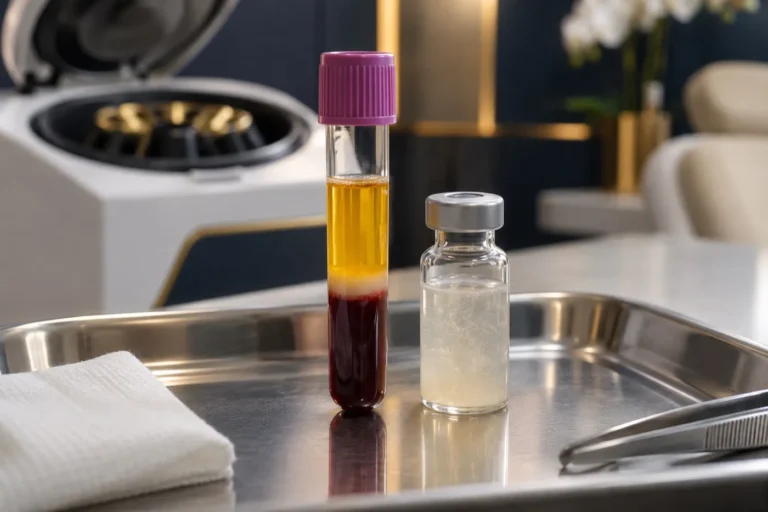
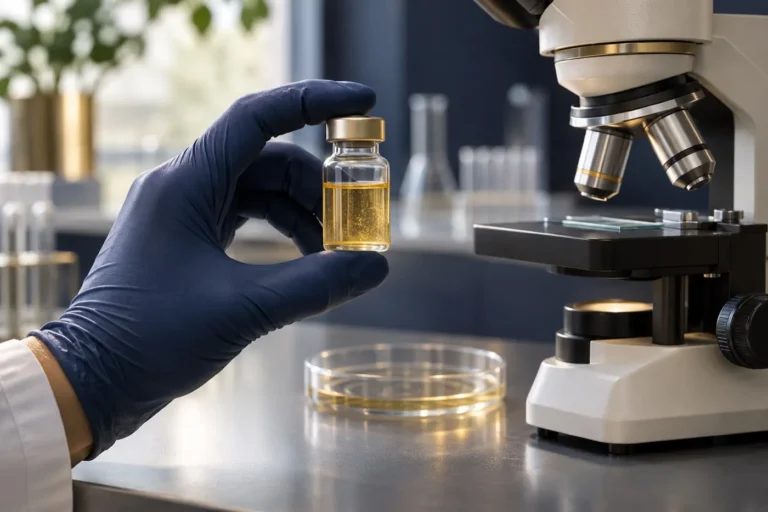
- Processing: the tissue is processed in the clinic to concentrate the regenerative cells and growth factors.
- Injection: the suspension is injected into the thinning areas of the scalp.
- Aftercare: mild tenderness for a few days; most people return to normal activities the next day.
| Stem cell hair treatment | |
|---|---|
| Typical duration | 1-3 hours |
| Anaesthesia | Local |
| Sessions | Usually 1, sometimes repeated after 6-12 months |
| Downtime | 1-2 days |
| When results appear | 3-6 months, if the treatment works for you |
| Best for | Early to moderate thinning |
Stem cell treatment at Akel Hair Clinic
At Akel Hair Clinic, stem cell treatment is offered together with a hair transplant. In our Stem Cell Hair Transplant, a few tiny skin samples are taken from behind the ear during the same session, processed in the clinic and applied to the transplanted and thinning areas. No liposuction and no fat harvesting are needed, and it adds only about 30-45 minutes to the procedure.
Other proven options
If you are thinning but not yet bald, treatments with stronger evidence are often the first step: PRP therapy, hair mesotherapy and low-level laser therapy, ideally together with medical treatment prescribed by a doctor. If you already have bald areas, a DHI or Sapphire FUE hair transplant is the only way to bring back permanent hair. During your free analysis, our doctor will tell you honestly which option fits your stage of hair loss.
Frequently asked questions
Can stem cell treatment regrow hair on a completely bald scalp?
No. Regenerative treatments can only work on follicles that still exist, even if they are weak and miniaturised. Areas that have been fully bald for years have no follicles left to activate. For these areas, a hair transplant is the only option that brings back permanent hair.
Is stem cell hair treatment approved?
There is no stem cell product approved by the US FDA or the European Medicines Agency specifically for hair loss. Clinics use same-day procedures with the patient’s own tissue, which are regulated differently from approved drugs. This is why it is important to choose a licensed clinic and a doctor who explains the evidence honestly.
How many sessions are needed?
Many protocols use one session, sometimes repeated after 6 to 12 months. Results, if they come, are usually seen after 3 to 6 months.
Is it painful?
It is done under local anaesthesia. Some tenderness, swelling or small marks where the tissue was taken are common for a few days.
Can stem cell treatment be combined with a hair transplant?
Yes. Some clinics use regenerative injections during or after a hair transplant to support healing and the surrounding native hair. A transplant still does the main work of covering bald areas.
Is stem cell treatment better than PRP?
Not proven. PRP has more published studies and is simpler and cheaper. Stem cell–based treatments are promising but the evidence is still early. Read our comparison Stem Cell vs PRP for Hair Loss for details.
Not sure which treatment is right for you?
Send photos of your hair through our free online hair analysis or on WhatsApp. Our team in Tirana will look at your hair loss stage and recommend the treatment with the best chance of success, without obligation.


 English
 Italian
 Albanian